
In this article
- What ADR is and why classification matters more than the commercial product name
- Information to prepare before requesting ADR transport
- Packaging and marking: what should be checked before loading
- ADR documentation and responsibilities within the transport chain
- Vehicle, driver, equipment and load securing
- ADR route planning: tunnels, transit countries and operational restrictions
- Exemptions, limited quantities and common misconceptions
- Step-by-step checklist before booking international ADR transport
ADR dangerous goods transport is not ordinary road freight with an additional label attached to a package. Dangerous-goods movements may be subject to specific requirements for classification, packaging, marking, documentation, vehicle equipment and route planning. A mismatch at any of these stages can result in a refused collection, operational delay or a complete change of transport plan.
For the shipper, the most important question is: what exactly is being transported from a regulatory transport perspective? Commercial descriptions such as paint, chemicals, aerosol, battery or technical liquid are not sufficient. Planning normally requires precise transport data, including the UN number, proper shipping name, hazard class and other applicable details.
Speedixa publishes practical information about international freight and logistics. For shipments falling under ADR, the website includes a dedicated hazardous goods delivery service. This guide focuses on shipment preparation rather than commercial claims: what must be known before booking, where errors commonly occur and why the route should be checked before a vehicle is dispatched.
What ADR is and why classification matters more than the commercial product name
ADR provides the framework for the international carriage of dangerous substances and articles by road. In practical terms, it establishes how transport risks are identified and how a shipment must be prepared and handled. For the shipper, this means that the process starts with correct product identification rather than with selecting a truck.
Dangerous goods are divided into hazard classes according to the main nature of the risk.
| Class | General category | Typical risk |
|---|---|---|
| 1 | Explosives | Explosion, detonation, projection |
| 2 | Gases | Pressure, flammability, toxicity |
| 3 | Flammable liquids | Fire involving liquid or vapour |
| 4 | Flammable solids and related categories | Fire, self-heating, reaction with water |
| 5 | Oxidising substances and organic peroxides | Intensified combustion or instability |
| 6 | Toxic and infectious substances | Poisoning or biological hazard |
| 7 | Radioactive material | Ionising radiation |
| 8 | Corrosive substances | Damage to tissue, metals and materials |
| 9 | Miscellaneous dangerous substances and articles | Other regulated transport hazards |
The class number alone is not enough. Transport conditions may also depend on the UN number, proper shipping name, packing group, subsidiary risks, quantity, packaging type and special provisions. Two products that look similar and have similar commercial uses can therefore be subject to different transport requirements.
A common operational mistake is to send a carrier only a commercial product description. A statement such as “paint products” does not establish whether every item is dangerous goods or which rules apply. A reliable request should be based on the transport classification of the actual commodity rather than assumptions based on its commercial name.
Information to prepare before requesting ADR transport
The more complete the initial data, the faster a forwarder can assess suitable equipment, restrictions and routing. For dangerous goods, the standard information of origin, weight and pallet count is not enough.
A useful request should include:
- UN number, where assigned;
- proper shipping name or official transport designation;
- hazard class and subsidiary risk where relevant;
- packing group where applicable;
- number of packages;
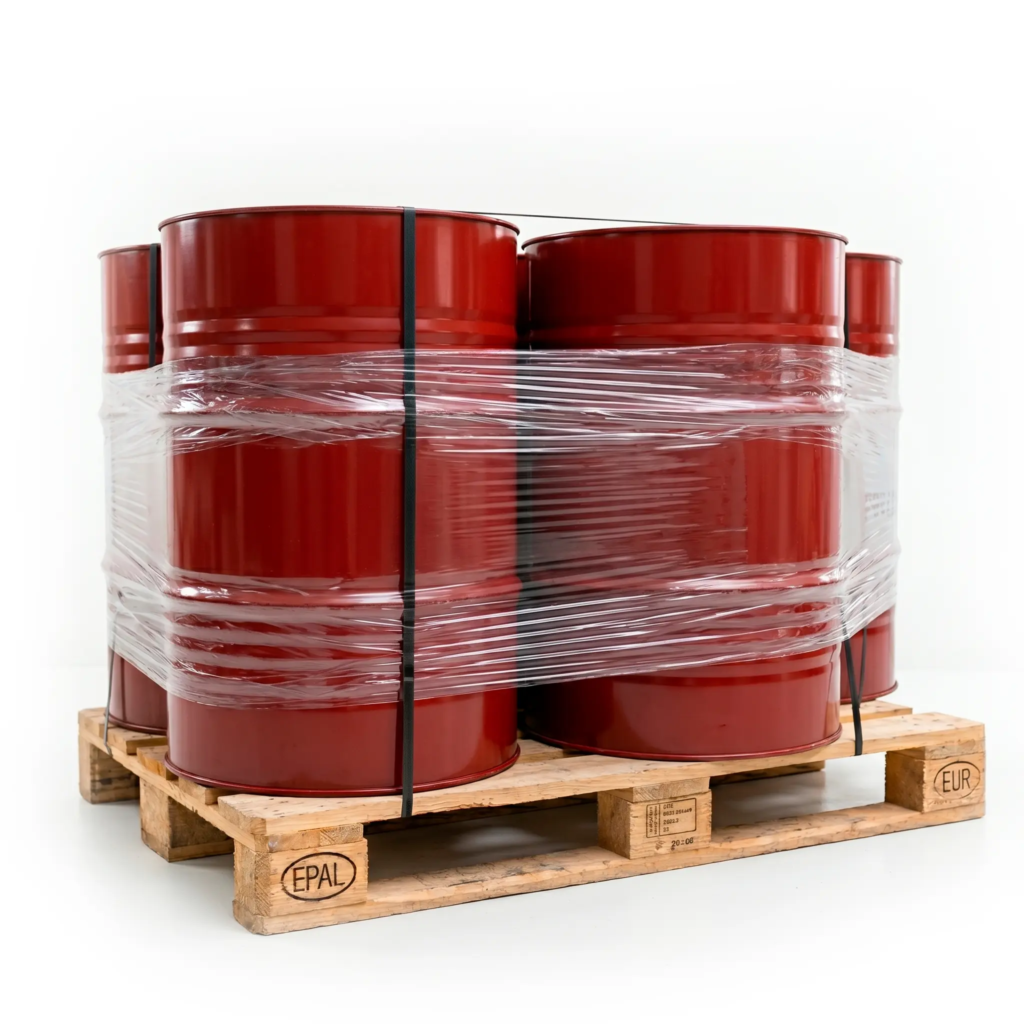
- packaging type, such as cartons, drums, jerricans, IBCs or cylinders;
- dangerous-goods quantity, mass or volume;
- overall shipment weight and dimensions;
- details of labels and package markings;
- exact collection and delivery addresses;
- expected transit countries if known;
- loading requirements and access restrictions;
- available product, commercial and transport documents.
A Safety Data Sheet is often a useful source because it may contain transport information. However, an SDS should not automatically be treated as the complete transport assessment. A document may describe the product generally, while the actual shipment can differ in concentration, physical form, quantity or packaging.
If the shipper is uncertain about the UN number or another classification detail, this should be raised before vehicle booking. Trying to resolve classification only after equipment has been assigned may result in a vehicle that is unsuitable for the actual transport regime.
Mixed shipments require particular attention. If several dangerous-goods entries and ordinary freight are loaded together, the transport operation must be assessed as a whole. Compatibility, segregation, package condition and the information in the transport documents should all be reviewed before dispatch.
Packaging and marking: what should be checked before loading
Correct classification does not by itself make a shipment ready for transport. Packaging and markings must correspond to the actual contents and to the transport regime being used. Operational problems often appear when paperwork and the physical shipment are checked side by side.
Packaging needs to be suitable for the product and transport conditions. Considerations can include chemical compatibility, mechanical strength, closure integrity, leakage prevention, internal pressure, orientation and the effect of normal road transport forces. For some goods, an approved packaging specification or filling limit may also be relevant.
Before collection, the shipper should check:
- whether the actual packaging matches the documentation;
- whether there is any damage, leakage, deformation or corrosion;
- whether closures, valves and caps are properly secured;
- whether quantity and fill level are appropriate;
- whether required UN numbers and hazard labels are present;
- whether labels remain visible after palletisation;
- whether stretch film, straps or outer packaging obscure required markings;
- whether package markings match the transport documents.
Mixed dangerous-goods pallets require extra care. Where packages carry different UN numbers or hazard labels, each marking must clearly correspond to the actual contents of that package.
Vehicle placards and package markings are not interchangeable. Marking a vehicle correctly does not compensate for incorrect package labels, and correct packages do not remove any applicable vehicle-marking requirement. The requirements depend on the transport regime.
A useful final control is to compare the physical shipment with the paperwork immediately before handover: package count, UN numbers, hazard labels, packaging condition and commodity data should all align. Detecting a mismatch at this stage is usually less disruptive than correcting it after the journey has begun.
ADR documentation and responsibilities within the transport chain
An ADR movement involves several parties, including the consignor, packer, loader, carrier, driver and consignee. Their obligations are linked to their roles, so dangerous-goods compliance cannot be treated as the driver’s responsibility alone.
The consignor must provide correct information about the goods and ensure that the shipment is offered for carriage in an appropriate form. The carrier needs to check requirements relevant to the vehicle and transport operation. During loading, cargo compatibility, positioning and securing may also need to be considered.
The transport document must identify the dangerous goods using the information required for the applicable movement. A wrong digit in the UN number, an incorrect transport name or a mismatch in quantity can create serious problems during an inspection or even before departure.
A practical document review should verify:
- that the same UN number appears consistently;
- that the proper shipping name is correctly stated;
- that the hazard class matches the package labels;
- that declared quantity matches the actual shipment;
- that package count and packaging type are correct;
- that any additional required information is included;
- that shipper, consignee and addresses match the actual route.
For international shipments, ADR data should also be consistent with commercial and customs documents. The formats do not need to be identical, but the commercial description should not contradict the transport classification.
Where dangerous goods form part of multimodal transportation, the road segment may be subject to ADR while the sea, air or rail leg is governed by another dangerous-goods framework. Compliance has to be checked for each mode; an ADR assessment for the road leg does not replace requirements applicable to other transport modes.
Vehicle, driver, equipment and load securing
A truck that can physically accommodate a pallet or several drums is not automatically suitable for an ADR shipment. The required vehicle configuration and equipment depend on the actual dangerous goods, quantity and transport regime.
Depending on the movement, the vehicle may require particular equipment or markings, and driver qualification requirements may apply. This is why the full classification should be provided before equipment is assigned rather than after the truck arrives at the site.
Beyond formal compliance, cargo placement is a practical safety issue. Dangerous goods need to be loaded and secured so that normal transport forces do not cause movement, overturning, package damage or contact between incompatible goods.
Vehicle planning should consider:
- total weight and package dimensions;
- packaging type;
- side, rear or top-loading needs;
- load-securing requirements;
- compatibility of multiple dangerous-goods entries;
- separation from other cargo where required;
- equipment required on the vehicle;
- temperature needs that may apply independently of ADR;
- access constraints at collection and delivery sites.
Securing is particularly important for drums, cylinders, jerricans, IBCs and other packages that are vulnerable to tipping or mechanical impact. Even robust packaging is not designed to move freely inside a vehicle during braking or cornering.
The shipper should communicate loading conditions in advance. Limited warehouse hours, gate procedures, height restrictions or the absence of side loading can affect vehicle choice just as much as the goods themselves.
An ADR movement should therefore be viewed as one integrated operation: commodity, packaging, vehicle, driver, equipment and route all need to be compatible. Checking only one element does not establish that the complete transport chain is suitable.
ADR route planning: tunnels, transit countries and operational restrictions
For standard freight, the route may be chosen mainly according to distance, tolls and driving time. For dangerous goods, that is not enough. Certain roads, tunnels, ferry connections, urban areas or infrastructure facilities may restrict particular dangerous-goods categories or vehicles.
This is why a request such as “Poland to Germany” provides too little detail for a full assessment. Exact origin and destination points are required. Even a small change in the delivery address can alter the practical approach road, permitted corridor or suitability of a tunnel.
International routing should consider:
- countries of transit;
- restrictions on planned roads and infrastructure;
- whether the route is suitable for the specific goods;
- possible detours;
- border and access conditions;
- local traffic restrictions;
- availability of suitable stopping or parking locations;
- warehouse opening and unloading times.
Tunnel restrictions can have a significant operational effect because some dangerous goods may be restricted on particular tunnel routes. A detour can materially increase mileage and transit time. For this reason, route suitability should be checked before confirming the transport plan and expected timing.
Ferry segments also require attention. Once the vehicle forms part of a maritime movement, road-transport knowledge alone may not be enough because the sea leg is subject to its own requirements.
When several countries are involved, the forwarder needs to consider both the common regulatory framework and the practical operating conditions in each location. Route design is therefore part of the compliance process rather than merely a navigation task left to the driver.
Exemptions, limited quantities and common misconceptions
ADR provides exemptions and simplified provisions for certain situations. In practice, this area generates many errors, especially with small commercial shipments.
A common misconception is that a low shipment weight automatically removes ADR requirements. It does not. The availability of an exemption depends on the exact classification, quantity, packaging and the conditions defined for the relevant provision.
Another mistake is to assume that a retail product can always move as ordinary freight. Commercial presentation does not determine the transport classification. Aerosols, paints, batteries and technical chemicals may still be dangerous goods even when they are sold in familiar consumer packaging.
It is also incorrect to assume that possession of an SDS settles every transport question. A Safety Data Sheet is an important information source, but the transport must still be assessed using the actual goods, packaging, quantity and routing.
A practical sequence is:
- identify the precise transport classification;
- check whether an exemption or special regime may apply;
- compare its conditions against the actual quantity and packaging;
- only then select the transport solution.
This order matters because relying on an exemption without confirming the conditions can create compliance risk after dispatch. Conversely, if a simplified regime legitimately applies, using it correctly can make the operation more straightforward.
Mixed loads deserve particular attention. Even where each individual item is present in a small quantity, the overall movement and the conditions for combined carriage still need to be assessed.
Step-by-step checklist before booking international ADR transport
A structured checklist helps ensure that important questions are resolved before the truck arrives.
- Identify the product. Prepare an exact commercial and transport description.
- Confirm the UN number. Do not use a number taken from a merely similar product.
- Confirm class and packing group. Include subsidiary risks and special conditions where applicable.
- Confirm quantity. State dangerous-goods quantity and total shipment weight.
- Describe the packaging. Give type, capacity, number of units, condition and pallet configuration.
- Verify marking. UN numbers and hazard labels should correspond to the actual contents.
- Prepare documentation. Provide the transport data before booking.
- Provide exact addresses. These are required for route and restriction checks.
- List transit countries. If alternative routes are acceptable, state this.
- Describe loading arrangements. Include dock, side loading, equipment, opening hours and gate restrictions.
- Declare mixed cargo. Identify both dangerous and non-dangerous freight planned for the same vehicle.
- Confirm unloading conditions. The consignee must be ready to receive the ADR shipment within the agreed operating window.
If some information is not available, that should be disclosed early. The forwarder can then identify which points need to be resolved before transport is confirmed.
The key operational principle is not to postpone compliance checks until loading day. At that stage, options for changing equipment, packaging or route are much more limited. The earlier classification and physical shipment readiness are confirmed, the more robust the transport plan becomes.
What this means for your business
ADR transport begins with information rather than with a vehicle. Correct classification determines how the goods should be packed and marked, which documents are required, what equipment may be suitable and which route restrictions need to be considered.
For the shipper, the most effective approach is to submit a complete ADR request before booking: UN number, proper shipping name, class, packing group where applicable, quantity, packaging, markings, exact addresses, transit countries and loading conditions. This allows inconsistencies to be identified before they become operational delays.
Dangerous goods do not have to be inherently difficult to transport. Problems are most likely when planning begins with incomplete or contradictory information. The more accurately the shipment is prepared, the clearer the requirements for the vehicle, route and documentation become.
Questions & answers
What does ADR mean in road freight?
ADR provides the framework for international carriage of dangerous goods by road. It covers classification, packaging, marking, documentation, equipment, vehicles and transport operations.
What information is required for an ADR transport request?
Provide the exact commodity description, UN number, proper shipping name, hazard class, packing group where applicable, quantity, packaging type, weight or volume, collection and delivery addresses and available transport documents.
Can a small dangerous-goods shipment move without full ADR requirements?
ADR contains exemptions and simplified regimes for certain conditions, but they do not apply automatically. The exact classification, quantity, packaging and applicable conditions need to be checked first.
Is an SDS enough to arrange ADR transport?
An SDS can contain useful transport data, but the actual classification, packaging, quantity and shipment documentation still need to be verified for the specific movement.