
Author - YEVHEN SK
Two workers handing over a metal case beside a van at an aircraft hangar

AOG logistics: define the maintenance handover that matters

In this article
  1. Operational priority
  2. Shipment details
  3. The final handover
  4. Turn urgency into a decision sequence
  5. Turn product restrictions into handling instructions
  6. Plan delivery beyond arrival at the gate
  7. Keep one current instruction through the shipment
  8. Briefing checklist

Before confirming transport with Speedixa, bring the route, cargo details and handover requirements into one clear shipment brief.

Operational priority

An AOG request should identify the operational handover, not just an airport. State which component is needed, who accepts it and the latest time it can reach the team responsible for the aircraft.

Shipment details

Make the physical shipment ready for assessment. Part references, packed dimensions, gross weight and handling instructions allow the available transport chain to be evaluated without overlooking acceptance conditions.

The final handover

Keep the final contact involved as the route is confirmed. Site access and receiving availability may determine whether an apparently fast arrival produces a useful handover; transport timing must reflect that final step.

Turn urgency into a decision sequence

Explain the consequence of missing the requested handover and distinguish it from a preferred arrival time. The person organising transport needs to know which deadline is operationally decisive, when the shipment can actually be released and who can approve a revised solution. This allows alternatives to be compared against the same task. Avoid replacing this information with labels such as urgent or immediately, which do not identify a workable collection and delivery sequence.

Work backwards from the required handover, listing the actions that must happen first: cargo release, packing confirmation, collection access, transport acceptance and receiving readiness. Mark dependencies that another party controls. For example, a component may be available at a supplier while the maintenance team has not yet confirmed an authorised recipient. Shortening the driving or flight segment does not resolve that missing handover. Decide in advance who can approve a different collection point or receiving arrangement if the original plan changes. A useful urgent request therefore contains both the deadline and a realistic path to acceptance. The final option, its scope and its feasibility must be confirmed for the particular shipment rather than assumed from an express service name.

If only part of the shipment is operationally critical, ask the customer whether a separate release is acceptable. Identify the exact units and receiving purpose before assessing that alternative. Splitting a shipment is a decision to approve, not an automatic way to promise an earlier completion.

Turn product restrictions into handling instructions

Ask the product owner to distinguish the identity of the goods from the conditions needed to move them. A technical item may have limits concerning orientation, shock, access to packaging or storage before use. Record only requirements that apply to the actual shipment, supported by the responsible contact or documentation. If the load includes batteries, liquids or other contents requiring further assessment, disclose them accurately rather than treating the outer product name as a complete description.

Translate each confirmed restriction into an action and an owner. If a case must remain upright, the packing description and receiving instruction should both communicate that requirement. If the packaging may be opened only by an authorised person, identify that person and confirm how acceptance will be documented without an unplanned opening. Do not assume that the transport team can inspect a product's technical condition or authorise its use. An example is a sealed replacement assembly: the receiver can acknowledge the physical package while the specialist performs the separate technical acceptance. Keeping those responsibilities distinct helps the shipment reach the right team without attributing unverified inspection or certification duties to the transport provider.

If accessories or separate cases belong to the same technical set, identify them in the packing record. Physical completeness and technical suitability remain different checks. A recipient should be able to recognise the agreed units without interpreting their presence as proof that the assembly is ready for use.

Plan delivery beyond arrival at the gate

The destination address is only the start of the receiving plan. Confirm the freight entrance, appointment procedure, unloading position and contact who can accept the shipment. Ask whether the proposed vehicle can reach that position and whether the required handling equipment will be available. If unloading is performed by the receiving site, record that arrangement. If assistance is requested from another party, obtain confirmation rather than treating it as included automatically.

Define what completes the delivery task. Arrival at a gate, registration at security and physical handover to a named department are separate events. For example, a component needed by a workshop is not operationally available merely because its vehicle has entered the industrial estate. Identify the reference, signature or receipt needed to confirm the agreed handover, and who should receive that confirmation. Share any access instructions before departure and keep a usable contact for changes. This allows the transport plan to reflect the actual receiving operation instead of relying on the assumption that someone at the address will know what to do with the goods.

Agree a contact path for an unexpected refusal or an unavailable unloading area. The receiving decision belongs to the authorised site contact. Drivers should have a clear way to report the situation, while revised instructions are approved by the responsible parties rather than improvised at the gate.

Keep one current instruction through the shipment

Choose one shipment reference and use it in the request, updates and receiving instructions. Allocate responsibility for confirming readiness, accepting changes and reporting the final handover. This does not require a complicated reporting system: a concise, current instruction is more useful than several attachments that contradict each other. Where information is missing, name the person expected to provide it and the point at which a decision is needed.

Treat a material change as a reason to review the plan, not simply as another message to forward. A larger package, a delayed production release or a different receiving location may affect the chosen arrangement. Describe what changed, which earlier detail it replaces and whether the change is confirmed. Ask the responsible parties to acknowledge the revised instruction. For example, when collection moves to another warehouse, updating the street address alone is insufficient if the opening hours and loading equipment also differ. At delivery, close the instruction with the agreed confirmation and record any unresolved discrepancy factually. This leaves a usable history without presenting an estimated event as a completed one.

When sharing an update, identify its source and confirmation time. A proposed change from a customer is not yet a confirmed change at the warehouse. Keep that distinction visible until the parties responsible for the affected operation have accepted the revised instruction.

Briefing checklist

  • Component and operational requirement
  • Packed dimensions and weight
  • Required maintenance handover
  • Access instructions and receiving contact

What this means for your business

For the relevant Speedixa service, see AOG Express Delivery; send the actual route, cargo data and handling requirements so the proposed arrangement can be checked for your shipment.

Worker measuring the height of a wooden crate on a warehouse scale

Air freight quotations: why packed dimensions matter

In this article
  1. The complete transport chain
  2. Cargo and handling requirements
  3. Connections and receiving
  4. Describe the load in its final packed state
  5. Connect the transport stages explicitly
  6. Check usable capacity and access together
  7. Match the description, documents and physical shipment
  8. Planning checklist

Before confirming transport with Speedixa, bring the route, cargo details and handover requirements into one clear shipment brief.

The complete transport chain

Measure the finished transport packaging before requesting a quote. Product dimensions can differ from the actual package, and a change in outer measurements may change the assessment of suitable transport arrangements.

Cargo and handling requirements

Provide a package-by-package breakdown where items differ. Counts, gross weights and individual measurements are more useful than an unexplained total, especially for a mixture of cartons, pallets or crates.

Connections and receiving

Update the enquiry if the packing changes. Tell the transport team before collection so that an earlier quotation or acceptance check can be reassessed against the cargo that will actually be handed over.

Describe the load in its final packed state

Use a packing list that describes what the transport team will actually handle. Record the number of units, external dimensions and gross weight of each type of package. Include pallets, frames, protruding parts and protective cases in the measurements. Where packages differ, list them separately rather than dividing the total weight by the number of pieces. Mark estimates as estimates and arrange a final measurement before confirming a solution that depends on precise dimensions.

Packaging and handling instructions should support each other. Explain which faces can be touched, where lifting equipment may engage and whether the orientation must remain unchanged. Photographs can clarify unusual shapes or visible access points, but they do not establish weight or lifting suitability on their own. Consider a replacement component supplied in a returnable frame: the frame is part of the transported unit and needs to be included in both the measurements and the return arrangements. Before release, ask the packing team to confirm that the description still matches the goods. If a pallet or case has changed, update the request as well as the packing list.

Keep net product weight and gross transport weight distinct in the records. If a protective case is added after the first enquiry, confirm the revised total with the packer. Updating only the photograph leaves the transport team without the actual measurement needed for its assessment.

Connect the transport stages explicitly

Draw the shipment as a sequence of handovers, including the first collection and the final delivery. For each connection, identify who releases the goods, who accepts them, the location and the reference used. A confirmed main transport segment does not automatically confirm the movements or handling on either side. Write down which party arranges each operation and which information must be available before it begins.

Pay particular attention to the dependency between readiness and the next stage. Goods arriving at a transfer point are not necessarily ready for the next movement if acceptance, release or receiving instructions are still unresolved. For example, after an international main leg, the onward vehicle may need a separate collection reference and a receiving appointment. Both should be coordinated with the actual release process. Ask what happens if a connection changes and who is authorised to approve the revised sequence. The practical output is one chain of responsibilities, with confirmed and provisional steps clearly distinguished. This is more informative than comparing only the departure and arrival times of the longest segment while leaving the interfaces unspecified.

Include any agreed return movement in a separate, identifiable task. Returning an empty frame or packaging is not confirmed merely because the outward movement is booked. Assign the release, collection reference and receiving contact for that return rather than leaving it attached to an already completed delivery instruction.

Check usable capacity and access together

Vehicle selection should follow the physical job. Ask whether the load must enter from the rear, the side or above, and whether a dock is available at both ends. Compare the external dimensions of the packed units with the proposed loading arrangement. A shipment that appears small by weight may still require considerable floor space because it cannot be stacked or placed beside other goods. State these restrictions explicitly instead of expecting them to be inferred from the product name.

Keep the distinction between sharing space and assigning a vehicle to one shipment clear. A full-load or dedicated arrangement and a part-load solution should be assessed against the same requirements: available loading space, handling, collection readiness and receiving conditions. Neither label alone establishes the final schedule or the equipment provided. As a practical check, ask the loading team to describe how each unit will move from its current position into the vehicle. If that operation requires a particular door, lifting device or clear space, obtain confirmation before booking rather than discovering the limitation when the vehicle arrives.

If stacking is permitted, ask the product owner to specify the conditions rather than marking the whole load simply stackable. Different packages may have different limits. Keep the proposed arrangement subject to confirmation by the parties responsible for packaging, loading and the vehicle.

Match the description, documents and physical shipment

Build the document set around the actual movement and ask the responsible specialists which documents are needed for that route and product. Start with a consistent goods description, package count, weights, shipper, consignee and shipment reference. The same shipment should not appear under different quantities or addresses in separate documents. Where the description is technical, include a contact who can clarify it; a broad label such as equipment is often insufficient for operational acceptance.

Separate commercial information from handling instructions while keeping the references connected. An invoice may identify ownership and value, but it does not explain how a case should be lifted or which workshop receives it. Conversely, a warehouse note does not replace documents required for the movement. If preparation is still in progress, identify the missing document and the person authorised to release it. For example, goods can be packed and ready while their release reference is not yet available. Confirm that this dependency is resolved before dispatch. Do not infer regulatory acceptance from the mere existence of a document: the proposed shipment and its data still need to be checked by the relevant parties.

Check document versions as well as their presence. If a packing list has been replaced, withdraw the previous version from the working instruction and identify the current one. Otherwise, correct documents can still create a mismatch when different participants refer to different editions of the same shipment record.

Planning checklist

  • Finished package dimensions
  • Gross weight by package type
  • Number of identical and different pieces
  • Commodity and special handling requirements

What this means for your business

For the relevant Speedixa service, see International Air Freight; send the actual route, cargo data and handling requirements so the proposed arrangement can be checked for your shipment.

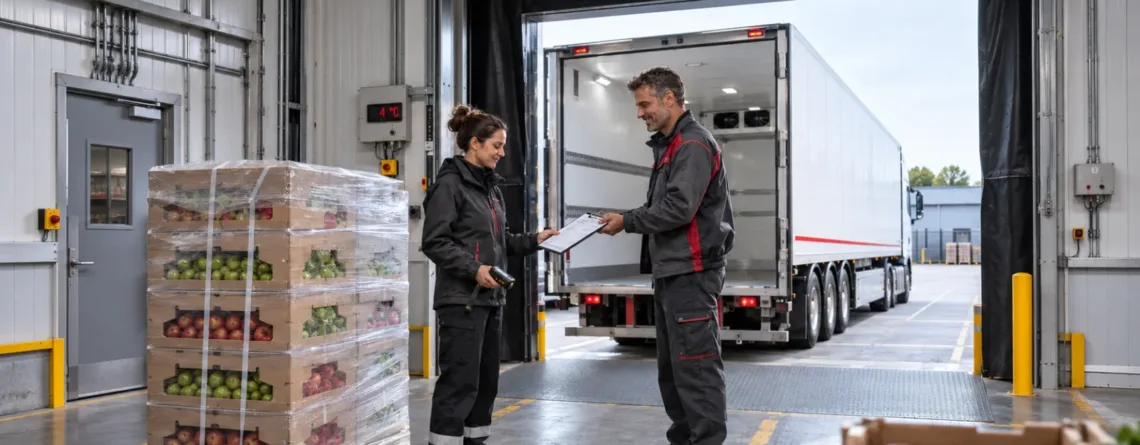
Two workers exchanging paperwork beside produce pallets and a refrigerated truck

Fresh goods: give the receiving team a complete handover brief

In this article
  1. Product requirements
  2. Preparation and documentation
  3. Acceptance and responsibilities
  4. Assign product conditions to every handover
  5. Plan delivery beyond arrival at the gate
  6. Match the description, documents and physical shipment
  7. Keep one current instruction through the shipment
  8. Details to confirm

Before confirming transport with Speedixa, bring the route, cargo details and handover requirements into one clear shipment brief.

Product requirements

Treat the receiving instruction as part of the shipment data. The consignee should know what is arriving, which transport conditions were agreed and who can answer questions about the particular batch.

Preparation and documentation

Align identification across the load and its documents. Batch references, package count and product descriptions should allow the receiving team to match the arriving goods to the expected delivery without ambiguity.

Acceptance and responsibilities

Agree how exceptions are communicated. If the appointment or acceptance arrangements change, the transport contact and the receiving team need one clear instruction rather than conflicting messages from several parties.

Assign product conditions to every handover

Obtain the transport and storage conditions from the product owner or the authorised quality contact. Record the required range, any relevant handling restrictions and the instructions for loading and unloading. Do not invent a temperature setting from a broad category such as food or healthcare. Products within one category can have different requirements, and the shipment instructions must refer to the goods actually being sent.

Check how those conditions apply at the interfaces, not only inside the vehicle. Who prepares the goods for collection, where will they wait and who accepts them at destination? If monitoring or a particular record is needed, agree what is required and who provides it before dispatch. The existence of refrigerated equipment alone does not define this arrangement. Consider a delivery whose receiving slot changes after loading: the responsible contacts need to review both the new schedule and the product instructions. Record deviations factually and refer decisions about product acceptability to the authorised product or quality specialist. The transport team should not be asked to infer a release decision from an unexplained temperature number or to replace the owner's handling instructions.

Where pre-collection preparation is required, ask who performs it and how readiness is confirmed. The product owner's instruction should define this task. Do not substitute an improvised cooling or warming step for missing guidance, and do not assume that the vehicle will correct unsuitable product preparation.

Plan delivery beyond arrival at the gate

The destination address is only the start of the receiving plan. Confirm the freight entrance, appointment procedure, unloading position and contact who can accept the shipment. Ask whether the proposed vehicle can reach that position and whether the required handling equipment will be available. If unloading is performed by the receiving site, record that arrangement. If assistance is requested from another party, obtain confirmation rather than treating it as included automatically.

Define what completes the delivery task. Arrival at a gate, registration at security and physical handover to a named department are separate events. For example, a component needed by a workshop is not operationally available merely because its vehicle has entered the industrial estate. Identify the reference, signature or receipt needed to confirm the agreed handover, and who should receive that confirmation. Share any access instructions before departure and keep a usable contact for changes. This allows the transport plan to reflect the actual receiving operation instead of relying on the assumption that someone at the address will know what to do with the goods.

Agree a contact path for an unexpected refusal or an unavailable unloading area. The receiving decision belongs to the authorised site contact. Drivers should have a clear way to report the situation, while revised instructions are approved by the responsible parties rather than improvised at the gate.

Match the description, documents and physical shipment

Build the document set around the actual movement and ask the responsible specialists which documents are needed for that route and product. Start with a consistent goods description, package count, weights, shipper, consignee and shipment reference. The same shipment should not appear under different quantities or addresses in separate documents. Where the description is technical, include a contact who can clarify it; a broad label such as equipment is often insufficient for operational acceptance.

Separate commercial information from handling instructions while keeping the references connected. An invoice may identify ownership and value, but it does not explain how a case should be lifted or which workshop receives it. Conversely, a warehouse note does not replace documents required for the movement. If preparation is still in progress, identify the missing document and the person authorised to release it. For example, goods can be packed and ready while their release reference is not yet available. Confirm that this dependency is resolved before dispatch. Do not infer regulatory acceptance from the mere existence of a document: the proposed shipment and its data still need to be checked by the relevant parties.

Check document versions as well as their presence. If a packing list has been replaced, withdraw the previous version from the working instruction and identify the current one. Otherwise, correct documents can still create a mismatch when different participants refer to different editions of the same shipment record.

Keep one current instruction through the shipment

Choose one shipment reference and use it in the request, updates and receiving instructions. Allocate responsibility for confirming readiness, accepting changes and reporting the final handover. This does not require a complicated reporting system: a concise, current instruction is more useful than several attachments that contradict each other. Where information is missing, name the person expected to provide it and the point at which a decision is needed.

Treat a material change as a reason to review the plan, not simply as another message to forward. A larger package, a delayed production release or a different receiving location may affect the chosen arrangement. Describe what changed, which earlier detail it replaces and whether the change is confirmed. Ask the responsible parties to acknowledge the revised instruction. For example, when collection moves to another warehouse, updating the street address alone is insufficient if the opening hours and loading equipment also differ. At delivery, close the instruction with the agreed confirmation and record any unresolved discrepancy factually. This leaves a usable history without presenting an estimated event as a completed one.

When sharing an update, identify its source and confirmation time. A proposed change from a customer is not yet a confirmed change at the warehouse. Keep that distinction visible until the parties responsible for the affected operation have accepted the revised instruction.

Details to confirm

  • Batch identification
  • Package count and product description
  • Agreed transport conditions
  • Receiving contact and exception instructions

What this means for your business

For the relevant Speedixa service, see Refrigerated delivery; send the actual route, cargo data and handling requirements so the proposed arrangement can be checked for your shipment.

Worker checking a tablet beside a pallet with a van and truck behind

Choosing a freight vehicle: begin with the job requirements

In this article
  1. Selection criteria
  2. Cargo preparation
  3. Coordination and handover
  4. Check usable capacity and access together
  5. Describe the load in its final packed state
  6. Define the route as an operational task
  7. Compare proposals against the same confirmed scope
  8. Information for the enquiry

Before confirming transport with Speedixa, bring the route, cargo details and handover requirements into one clear shipment brief.

Selection criteria

Define the load and the required handling before asking for a vehicle category. Dimensions, cargo weight and the way goods must enter and leave the vehicle are more useful than a model name alone.

Cargo preparation

Check the operating environment at both sites. Loading docks, access restrictions and available handling equipment must fit the proposed vehicle, particularly where the receiving location differs from a conventional warehouse.

Coordination and handover

Confirm availability and suitability for the actual shipment. A fleet presentation describes transport resources; the vehicle assigned to a booking still needs to be checked against the route, load and requested dates.

Check usable capacity and access together

Vehicle selection should follow the physical job. Ask whether the load must enter from the rear, the side or above, and whether a dock is available at both ends. Compare the external dimensions of the packed units with the proposed loading arrangement. A shipment that appears small by weight may still require considerable floor space because it cannot be stacked or placed beside other goods. State these restrictions explicitly instead of expecting them to be inferred from the product name.

Keep the distinction between sharing space and assigning a vehicle to one shipment clear. A full-load or dedicated arrangement and a part-load solution should be assessed against the same requirements: available loading space, handling, collection readiness and receiving conditions. Neither label alone establishes the final schedule or the equipment provided. As a practical check, ask the loading team to describe how each unit will move from its current position into the vehicle. If that operation requires a particular door, lifting device or clear space, obtain confirmation before booking rather than discovering the limitation when the vehicle arrives.

If stacking is permitted, ask the product owner to specify the conditions rather than marking the whole load simply stackable. Different packages may have different limits. Keep the proposed arrangement subject to confirmation by the parties responsible for packaging, loading and the vehicle.

Describe the load in its final packed state

Use a packing list that describes what the transport team will actually handle. Record the number of units, external dimensions and gross weight of each type of package. Include pallets, frames, protruding parts and protective cases in the measurements. Where packages differ, list them separately rather than dividing the total weight by the number of pieces. Mark estimates as estimates and arrange a final measurement before confirming a solution that depends on precise dimensions.

Packaging and handling instructions should support each other. Explain which faces can be touched, where lifting equipment may engage and whether the orientation must remain unchanged. Photographs can clarify unusual shapes or visible access points, but they do not establish weight or lifting suitability on their own. Consider a replacement component supplied in a returnable frame: the frame is part of the transported unit and needs to be included in both the measurements and the return arrangements. Before release, ask the packing team to confirm that the description still matches the goods. If a pallet or case has changed, update the request as well as the packing list.

Keep net product weight and gross transport weight distinct in the records. If a protective case is added after the first enquiry, confirm the revised total with the packer. Updating only the photograph leaves the transport team without the actual measurement needed for its assessment.

Define the route as an operational task

A route becomes useful for planning when it identifies the actual points of collection and delivery, rather than only the countries involved. Include the postcode, the entrance used by freight vehicles and the contact responsible for access. If a factory gate and a loading bay have different addresses, explain which location the driver should use. A map pin can support the written instructions, but it should not replace the address and contact details.

Separate the earliest possible collection from the latest acceptable arrival. These are different constraints: goods can be ready while the receiving site is still closed. State which times are confirmed and which remain provisional, including the local time at each location. For example, if loading is possible only after a production release, identify the person who gives that release. The practical result should be a route brief that another dispatcher can understand without reconstructing the shipment from several emails. Check it with both sites before selecting the transport arrangement.

When access instructions come from a third-party warehouse, verify them with that warehouse rather than copying an old delivery note. Record when the information was confirmed. A correct customer address can still lead to the wrong gate if a previous shipment used a different receiving department.

Compare proposals against the same confirmed scope

A useful comparison starts with a common set of shipment requirements. Give each proposed arrangement the same collection point, packed load, readiness information and receiving conditions. Separate essential requirements from preferences, and disclose any flexibility that can genuinely be used. This avoids comparing options that appear similar but assume different tasks. A more attractive headline offer is not a meaningful alternative if it omits an operation that the shipment requires.

Ask what is included, which assumptions remain open and what would trigger a review of the proposal. Relevant points may include loading responsibility, intermediate handling, appointment arrangements or the onward delivery task. The applicable scope should be confirmed for the actual request; do not infer a price or a fixed delivery commitment from a general service description. For example, a receiving window can be flexible even when the collection day is fixed, but that flexibility must be approved by the customer rather than invented by the organiser. Before acceptance, turn the selected proposal into one agreed instruction. Keep unresolved conditions visible so that booking does not accidentally convert an estimate into an expectation that nobody has confirmed.

Check that the proposal still refers to the current shipment when you accept it. If the cargo or required operation has changed since the enquiry, request confirmation of the revised scope. Keeping the original reference does not itself preserve the assumptions under which an earlier option was assessed.

Information for the enquiry

  • Cargo dimensions and gross weight
  • Required loading method
  • Access at both sites
  • Special conditions and requested dates

What this means for your business

For the relevant Speedixa service, see Standard cargo delivery; send the actual route, cargo data and handling requirements so the proposed arrangement can be checked for your shipment.

Warehouse worker scanning a parcel on a packing table

Peak-season retail logistics: separate fixed priorities from flexibility

In this article
  1. Selection criteria
  2. Cargo preparation
  3. Coordination and handover
  4. Compare proposals against the same confirmed scope
  5. Plan delivery beyond arrival at the gate
  6. Turn urgency into a decision sequence
  7. Keep one current instruction through the shipment
  8. Information for the enquiry

Before confirming transport with Speedixa, bring the route, cargo details and handover requirements into one clear shipment brief.

Selection criteria

Identify which deliveries protect a fixed business event or receiving appointment. Prioritising every order equally makes it harder to decide what should move first when capacity or warehouse availability changes.

Cargo preparation

Send confirmed volumes as early as they become reliable. Distinguish firm pallet counts from estimates and communicate changes clearly, because a revised order can alter the space and vehicle required.

Coordination and handover

Keep the receiving site involved in the plan. Agree alternative slots where possible and identify who can approve a revised appointment, rather than sending a vehicle towards an unconfirmed delivery window.

Compare proposals against the same confirmed scope

A useful comparison starts with a common set of shipment requirements. Give each proposed arrangement the same collection point, packed load, readiness information and receiving conditions. Separate essential requirements from preferences, and disclose any flexibility that can genuinely be used. This avoids comparing options that appear similar but assume different tasks. A more attractive headline offer is not a meaningful alternative if it omits an operation that the shipment requires.

Ask what is included, which assumptions remain open and what would trigger a review of the proposal. Relevant points may include loading responsibility, intermediate handling, appointment arrangements or the onward delivery task. The applicable scope should be confirmed for the actual request; do not infer a price or a fixed delivery commitment from a general service description. For example, a receiving window can be flexible even when the collection day is fixed, but that flexibility must be approved by the customer rather than invented by the organiser. Before acceptance, turn the selected proposal into one agreed instruction. Keep unresolved conditions visible so that booking does not accidentally convert an estimate into an expectation that nobody has confirmed.

Check that the proposal still refers to the current shipment when you accept it. If the cargo or required operation has changed since the enquiry, request confirmation of the revised scope. Keeping the original reference does not itself preserve the assumptions under which an earlier option was assessed.

Plan delivery beyond arrival at the gate

The destination address is only the start of the receiving plan. Confirm the freight entrance, appointment procedure, unloading position and contact who can accept the shipment. Ask whether the proposed vehicle can reach that position and whether the required handling equipment will be available. If unloading is performed by the receiving site, record that arrangement. If assistance is requested from another party, obtain confirmation rather than treating it as included automatically.

Define what completes the delivery task. Arrival at a gate, registration at security and physical handover to a named department are separate events. For example, a component needed by a workshop is not operationally available merely because its vehicle has entered the industrial estate. Identify the reference, signature or receipt needed to confirm the agreed handover, and who should receive that confirmation. Share any access instructions before departure and keep a usable contact for changes. This allows the transport plan to reflect the actual receiving operation instead of relying on the assumption that someone at the address will know what to do with the goods.

Agree a contact path for an unexpected refusal or an unavailable unloading area. The receiving decision belongs to the authorised site contact. Drivers should have a clear way to report the situation, while revised instructions are approved by the responsible parties rather than improvised at the gate.

Turn urgency into a decision sequence

Explain the consequence of missing the requested handover and distinguish it from a preferred arrival time. The person organising transport needs to know which deadline is operationally decisive, when the shipment can actually be released and who can approve a revised solution. This allows alternatives to be compared against the same task. Avoid replacing this information with labels such as urgent or immediately, which do not identify a workable collection and delivery sequence.

Work backwards from the required handover, listing the actions that must happen first: cargo release, packing confirmation, collection access, transport acceptance and receiving readiness. Mark dependencies that another party controls. For example, a component may be available at a supplier while the maintenance team has not yet confirmed an authorised recipient. Shortening the driving or flight segment does not resolve that missing handover. Decide in advance who can approve a different collection point or receiving arrangement if the original plan changes. A useful urgent request therefore contains both the deadline and a realistic path to acceptance. The final option, its scope and its feasibility must be confirmed for the particular shipment rather than assumed from an express service name.

If only part of the shipment is operationally critical, ask the customer whether a separate release is acceptable. Identify the exact units and receiving purpose before assessing that alternative. Splitting a shipment is a decision to approve, not an automatic way to promise an earlier completion.

Keep one current instruction through the shipment

Choose one shipment reference and use it in the request, updates and receiving instructions. Allocate responsibility for confirming readiness, accepting changes and reporting the final handover. This does not require a complicated reporting system: a concise, current instruction is more useful than several attachments that contradict each other. Where information is missing, name the person expected to provide it and the point at which a decision is needed.

Treat a material change as a reason to review the plan, not simply as another message to forward. A larger package, a delayed production release or a different receiving location may affect the chosen arrangement. Describe what changed, which earlier detail it replaces and whether the change is confirmed. Ask the responsible parties to acknowledge the revised instruction. For example, when collection moves to another warehouse, updating the street address alone is insufficient if the opening hours and loading equipment also differ. At delivery, close the instruction with the agreed confirmation and record any unresolved discrepancy factually. This leaves a usable history without presenting an estimated event as a completed one.

When sharing an update, identify its source and confirmation time. A proposed change from a customer is not yet a confirmed change at the warehouse. Keep that distinction visible until the parties responsible for the affected operation have accepted the revised instruction.

Information for the enquiry

  • Fixed business deadlines
  • Confirmed and estimated volumes
  • Receiving appointments
  • Approved alternative delivery windows

What this means for your business

For the relevant Speedixa service, see Standard cargo delivery; send the actual route, cargo data and handling requirements so the proposed arrangement can be checked for your shipment.

Warehouse worker checking three wrapped pallets before dispatch

Several suppliers: organise one consolidated onward shipment

In this article
  1. The warehouse task
  2. Receiving and handling
  3. Release and onward delivery
  4. Define the warehouse operation and release rules
  5. Connect the transport stages explicitly
  6. Match the description, documents and physical shipment
  7. Keep one current instruction through the shipment
  8. Operations to confirm

Before confirming transport with Speedixa, bring the route, cargo details and handover requirements into one clear shipment brief.

The warehouse task

Create a separate inbound reference for each supplier. The consolidation point needs to know what is expected, when it can arrive and how each incoming shipment relates to the onward delivery.

Receiving and handling

Agree the warehouse operations before arrivals begin. Counting, sorting, repacking or labelling should be included only where needed and confirmed as part of the handling instruction for the actual goods.

Release and onward delivery

Define the release rule for the combined shipment. Decide who confirms that all required goods are ready and what instruction applies if one supplier arrives later than expected.

Define the warehouse operation and release rules

Describe why the goods need a warehouse stop and what must happen there. Receiving a shipment, holding it, combining supplier deliveries and preparing an onward release are different tasks. State which operations are requested and ask for their availability and scope to be confirmed. Include package identification, the expected inbound sequence and the information needed to recognise each delivery. Do not assume that a general warehousing enquiry automatically includes repacking, inspection or order preparation.

The release plan should be as clear as the inbound plan. Identify who authorises dispatch, which units belong to the onward shipment and how the collecting party is recognised. If only some of the goods are ready, decide whether they can leave separately or must wait for the complete set. For example, two supplier deliveries intended for one customer may need a matching reference before consolidation can be authorised. Agree how a quantity discrepancy will be reported and who can resolve it. This creates a controlled interface between storage and transport, with tasks assigned before vehicles arrive. It also allows the onward request to use the dimensions and weights of the actual released units rather than outdated supplier estimates.

Agree how visible discrepancies are recorded before goods are combined or released. The warehouse report should describe the observed units and condition without inventing a cause. Name the party that decides the next action, particularly when the discrepancy affects a customer order or a planned onward collection.

Connect the transport stages explicitly

Draw the shipment as a sequence of handovers, including the first collection and the final delivery. For each connection, identify who releases the goods, who accepts them, the location and the reference used. A confirmed main transport segment does not automatically confirm the movements or handling on either side. Write down which party arranges each operation and which information must be available before it begins.

Pay particular attention to the dependency between readiness and the next stage. Goods arriving at a transfer point are not necessarily ready for the next movement if acceptance, release or receiving instructions are still unresolved. For example, after an international main leg, the onward vehicle may need a separate collection reference and a receiving appointment. Both should be coordinated with the actual release process. Ask what happens if a connection changes and who is authorised to approve the revised sequence. The practical output is one chain of responsibilities, with confirmed and provisional steps clearly distinguished. This is more informative than comparing only the departure and arrival times of the longest segment while leaving the interfaces unspecified.

Include any agreed return movement in a separate, identifiable task. Returning an empty frame or packaging is not confirmed merely because the outward movement is booked. Assign the release, collection reference and receiving contact for that return rather than leaving it attached to an already completed delivery instruction.

Match the description, documents and physical shipment

Build the document set around the actual movement and ask the responsible specialists which documents are needed for that route and product. Start with a consistent goods description, package count, weights, shipper, consignee and shipment reference. The same shipment should not appear under different quantities or addresses in separate documents. Where the description is technical, include a contact who can clarify it; a broad label such as equipment is often insufficient for operational acceptance.

Separate commercial information from handling instructions while keeping the references connected. An invoice may identify ownership and value, but it does not explain how a case should be lifted or which workshop receives it. Conversely, a warehouse note does not replace documents required for the movement. If preparation is still in progress, identify the missing document and the person authorised to release it. For example, goods can be packed and ready while their release reference is not yet available. Confirm that this dependency is resolved before dispatch. Do not infer regulatory acceptance from the mere existence of a document: the proposed shipment and its data still need to be checked by the relevant parties.

Check document versions as well as their presence. If a packing list has been replaced, withdraw the previous version from the working instruction and identify the current one. Otherwise, correct documents can still create a mismatch when different participants refer to different editions of the same shipment record.

Keep one current instruction through the shipment

Choose one shipment reference and use it in the request, updates and receiving instructions. Allocate responsibility for confirming readiness, accepting changes and reporting the final handover. This does not require a complicated reporting system: a concise, current instruction is more useful than several attachments that contradict each other. Where information is missing, name the person expected to provide it and the point at which a decision is needed.

Treat a material change as a reason to review the plan, not simply as another message to forward. A larger package, a delayed production release or a different receiving location may affect the chosen arrangement. Describe what changed, which earlier detail it replaces and whether the change is confirmed. Ask the responsible parties to acknowledge the revised instruction. For example, when collection moves to another warehouse, updating the street address alone is insufficient if the opening hours and loading equipment also differ. At delivery, close the instruction with the agreed confirmation and record any unresolved discrepancy factually. This leaves a usable history without presenting an estimated event as a completed one.

When sharing an update, identify its source and confirmation time. A proposed change from a customer is not yet a confirmed change at the warehouse. Keep that distinction visible until the parties responsible for the affected operation have accepted the revised instruction.

Operations to confirm

  • Supplier references
  • Expected inbound shipments
  • Required warehouse operations
  • Release decision and onward delivery window

What this means for your business

For the relevant Speedixa service, see Warehouse logistics; send the actual route, cargo data and handling requirements so the proposed arrangement can be checked for your shipment.

Worker placing a protective case into a foam-lined shipping carton

Medical devices: prepare handling instructions before transport

In this article
  1. Product requirements
  2. Preparation and documentation
  3. Acceptance and responsibilities
  4. Turn product restrictions into handling instructions
  5. Describe the load in its final packed state
  6. Plan delivery beyond arrival at the gate
  7. Match the description, documents and physical shipment
  8. Details to confirm

Before confirming transport with Speedixa, bring the route, cargo details and handover requirements into one clear shipment brief.

Product requirements

Describe the equipment in its transport packaging. Packed dimensions, gross weight and any restrictions on orientation or stacking are needed even when the shipment is neither temperature-controlled nor immediately urgent.

Preparation and documentation

Supply the instructions relevant to the actual movement. Sensitive components, permitted handling points and any product-specific transport conditions should be established by the responsible party, rather than assumed by the driver.

Acceptance and responsibilities

Confirm what the delivery includes at the receiving site. Arrival at a hospital or warehouse does not automatically include internal movement, unpacking or installation; any additional handling must be agreed separately.

Turn product restrictions into handling instructions

Ask the product owner to distinguish the identity of the goods from the conditions needed to move them. A technical item may have limits concerning orientation, shock, access to packaging or storage before use. Record only requirements that apply to the actual shipment, supported by the responsible contact or documentation. If the load includes batteries, liquids or other contents requiring further assessment, disclose them accurately rather than treating the outer product name as a complete description.

Translate each confirmed restriction into an action and an owner. If a case must remain upright, the packing description and receiving instruction should both communicate that requirement. If the packaging may be opened only by an authorised person, identify that person and confirm how acceptance will be documented without an unplanned opening. Do not assume that the transport team can inspect a product's technical condition or authorise its use. An example is a sealed replacement assembly: the receiver can acknowledge the physical package while the specialist performs the separate technical acceptance. Keeping those responsibilities distinct helps the shipment reach the right team without attributing unverified inspection or certification duties to the transport provider.

If accessories or separate cases belong to the same technical set, identify them in the packing record. Physical completeness and technical suitability remain different checks. A recipient should be able to recognise the agreed units without interpreting their presence as proof that the assembly is ready for use.

Describe the load in its final packed state

Use a packing list that describes what the transport team will actually handle. Record the number of units, external dimensions and gross weight of each type of package. Include pallets, frames, protruding parts and protective cases in the measurements. Where packages differ, list them separately rather than dividing the total weight by the number of pieces. Mark estimates as estimates and arrange a final measurement before confirming a solution that depends on precise dimensions.

Packaging and handling instructions should support each other. Explain which faces can be touched, where lifting equipment may engage and whether the orientation must remain unchanged. Photographs can clarify unusual shapes or visible access points, but they do not establish weight or lifting suitability on their own. Consider a replacement component supplied in a returnable frame: the frame is part of the transported unit and needs to be included in both the measurements and the return arrangements. Before release, ask the packing team to confirm that the description still matches the goods. If a pallet or case has changed, update the request as well as the packing list.

Keep net product weight and gross transport weight distinct in the records. If a protective case is added after the first enquiry, confirm the revised total with the packer. Updating only the photograph leaves the transport team without the actual measurement needed for its assessment.

Plan delivery beyond arrival at the gate

The destination address is only the start of the receiving plan. Confirm the freight entrance, appointment procedure, unloading position and contact who can accept the shipment. Ask whether the proposed vehicle can reach that position and whether the required handling equipment will be available. If unloading is performed by the receiving site, record that arrangement. If assistance is requested from another party, obtain confirmation rather than treating it as included automatically.

Define what completes the delivery task. Arrival at a gate, registration at security and physical handover to a named department are separate events. For example, a component needed by a workshop is not operationally available merely because its vehicle has entered the industrial estate. Identify the reference, signature or receipt needed to confirm the agreed handover, and who should receive that confirmation. Share any access instructions before departure and keep a usable contact for changes. This allows the transport plan to reflect the actual receiving operation instead of relying on the assumption that someone at the address will know what to do with the goods.

Agree a contact path for an unexpected refusal or an unavailable unloading area. The receiving decision belongs to the authorised site contact. Drivers should have a clear way to report the situation, while revised instructions are approved by the responsible parties rather than improvised at the gate.

Match the description, documents and physical shipment

Build the document set around the actual movement and ask the responsible specialists which documents are needed for that route and product. Start with a consistent goods description, package count, weights, shipper, consignee and shipment reference. The same shipment should not appear under different quantities or addresses in separate documents. Where the description is technical, include a contact who can clarify it; a broad label such as equipment is often insufficient for operational acceptance.

Separate commercial information from handling instructions while keeping the references connected. An invoice may identify ownership and value, but it does not explain how a case should be lifted or which workshop receives it. Conversely, a warehouse note does not replace documents required for the movement. If preparation is still in progress, identify the missing document and the person authorised to release it. For example, goods can be packed and ready while their release reference is not yet available. Confirm that this dependency is resolved before dispatch. Do not infer regulatory acceptance from the mere existence of a document: the proposed shipment and its data still need to be checked by the relevant parties.

Check document versions as well as their presence. If a packing list has been replaced, withdraw the previous version from the working instruction and identify the current one. Otherwise, correct documents can still create a mismatch when different participants refer to different editions of the same shipment record.

Details to confirm

  • Packed device dimensions
  • Weight and orientation limits
  • Product handling instructions
  • Exact delivery scope and receiving contact

What this means for your business

For the relevant Speedixa service, see Standard cargo delivery; send the actual route, cargo data and handling requirements so the proposed arrangement can be checked for your shipment.

Two workers in helmets reviewing unloading details beside wooden crates

Unloading arrangements: confirm the site before booking a truck

In this article
  1. Selection criteria
  2. Cargo preparation
  3. Coordination and handover
  4. Plan delivery beyond arrival at the gate
  5. Check usable capacity and access together
  6. Define the route as an operational task
  7. Compare proposals against the same confirmed scope
  8. Information for the enquiry

Before confirming transport with Speedixa, bring the route, cargo details and handover requirements into one clear shipment brief.

Selection criteria

Ask how the load will leave the vehicle before selecting the transport. A receiving address without a workable unloading method can leave an otherwise suitable truck unable to complete the delivery.

Cargo preparation

Check equipment against the actual pieces. Item weight, dimensions and handling points matter when confirming available machinery, along with the working space and access to the unloading position.

Coordination and handover

Nominate the person coordinating the unloading slot. Confirm that the goods, vehicle and site team are expected at the same time, and communicate revised instructions before the truck arrives.

Plan delivery beyond arrival at the gate

The destination address is only the start of the receiving plan. Confirm the freight entrance, appointment procedure, unloading position and contact who can accept the shipment. Ask whether the proposed vehicle can reach that position and whether the required handling equipment will be available. If unloading is performed by the receiving site, record that arrangement. If assistance is requested from another party, obtain confirmation rather than treating it as included automatically.

Define what completes the delivery task. Arrival at a gate, registration at security and physical handover to a named department are separate events. For example, a component needed by a workshop is not operationally available merely because its vehicle has entered the industrial estate. Identify the reference, signature or receipt needed to confirm the agreed handover, and who should receive that confirmation. Share any access instructions before departure and keep a usable contact for changes. This allows the transport plan to reflect the actual receiving operation instead of relying on the assumption that someone at the address will know what to do with the goods.

Agree a contact path for an unexpected refusal or an unavailable unloading area. The receiving decision belongs to the authorised site contact. Drivers should have a clear way to report the situation, while revised instructions are approved by the responsible parties rather than improvised at the gate.

Check usable capacity and access together

Vehicle selection should follow the physical job. Ask whether the load must enter from the rear, the side or above, and whether a dock is available at both ends. Compare the external dimensions of the packed units with the proposed loading arrangement. A shipment that appears small by weight may still require considerable floor space because it cannot be stacked or placed beside other goods. State these restrictions explicitly instead of expecting them to be inferred from the product name.

Keep the distinction between sharing space and assigning a vehicle to one shipment clear. A full-load or dedicated arrangement and a part-load solution should be assessed against the same requirements: available loading space, handling, collection readiness and receiving conditions. Neither label alone establishes the final schedule or the equipment provided. As a practical check, ask the loading team to describe how each unit will move from its current position into the vehicle. If that operation requires a particular door, lifting device or clear space, obtain confirmation before booking rather than discovering the limitation when the vehicle arrives.

If stacking is permitted, ask the product owner to specify the conditions rather than marking the whole load simply stackable. Different packages may have different limits. Keep the proposed arrangement subject to confirmation by the parties responsible for packaging, loading and the vehicle.

Define the route as an operational task

A route becomes useful for planning when it identifies the actual points of collection and delivery, rather than only the countries involved. Include the postcode, the entrance used by freight vehicles and the contact responsible for access. If a factory gate and a loading bay have different addresses, explain which location the driver should use. A map pin can support the written instructions, but it should not replace the address and contact details.

Separate the earliest possible collection from the latest acceptable arrival. These are different constraints: goods can be ready while the receiving site is still closed. State which times are confirmed and which remain provisional, including the local time at each location. For example, if loading is possible only after a production release, identify the person who gives that release. The practical result should be a route brief that another dispatcher can understand without reconstructing the shipment from several emails. Check it with both sites before selecting the transport arrangement.

When access instructions come from a third-party warehouse, verify them with that warehouse rather than copying an old delivery note. Record when the information was confirmed. A correct customer address can still lead to the wrong gate if a previous shipment used a different receiving department.

Compare proposals against the same confirmed scope

A useful comparison starts with a common set of shipment requirements. Give each proposed arrangement the same collection point, packed load, readiness information and receiving conditions. Separate essential requirements from preferences, and disclose any flexibility that can genuinely be used. This avoids comparing options that appear similar but assume different tasks. A more attractive headline offer is not a meaningful alternative if it omits an operation that the shipment requires.

Ask what is included, which assumptions remain open and what would trigger a review of the proposal. Relevant points may include loading responsibility, intermediate handling, appointment arrangements or the onward delivery task. The applicable scope should be confirmed for the actual request; do not infer a price or a fixed delivery commitment from a general service description. For example, a receiving window can be flexible even when the collection day is fixed, but that flexibility must be approved by the customer rather than invented by the organiser. Before acceptance, turn the selected proposal into one agreed instruction. Keep unresolved conditions visible so that booking does not accidentally convert an estimate into an expectation that nobody has confirmed.

Check that the proposal still refers to the current shipment when you accept it. If the cargo or required operation has changed since the enquiry, request confirmation of the revised scope. Keeping the original reference does not itself preserve the assumptions under which an earlier option was assessed.

Information for the enquiry

  • Unloading method
  • Piece dimensions and weight
  • Available equipment and working space
  • Receiving team and confirmed slot

What this means for your business

For the relevant Speedixa service, see Standard cargo delivery; send the actual route, cargo data and handling requirements so the proposed arrangement can be checked for your shipment.

Two workers recording the condition of a car beside a car transporter

Vehicles and automotive equipment: assess transport feasibility first

In this article
  1. Selection criteria
  2. Cargo preparation
  3. Coordination and handover
  4. Check usable capacity and access together
  5. Describe the load in its final packed state
  6. Turn product restrictions into handling instructions
  7. Define the route as an operational task
  8. Information for the enquiry

Before confirming transport with Speedixa, bring the route, cargo details and handover requirements into one clear shipment brief.

Selection criteria

Identify exactly what needs moving. A complete vehicle, a rolling chassis and packaged automotive equipment have different loading characteristics; send photographs and dimensions instead of relying on the automotive category alone.

Cargo preparation

Explain the item's condition and loading method. Whether it can move independently, where lifting or securing is permitted and which equipment is available at each site all affect feasibility.

Coordination and handover

Request confirmation for the specific movement. An automotive-parts service page should not be treated as a promise that every vehicle or oversized item can be accepted using standard equipment.

Check usable capacity and access together

Vehicle selection should follow the physical job. Ask whether the load must enter from the rear, the side or above, and whether a dock is available at both ends. Compare the external dimensions of the packed units with the proposed loading arrangement. A shipment that appears small by weight may still require considerable floor space because it cannot be stacked or placed beside other goods. State these restrictions explicitly instead of expecting them to be inferred from the product name.

Keep the distinction between sharing space and assigning a vehicle to one shipment clear. A full-load or dedicated arrangement and a part-load solution should be assessed against the same requirements: available loading space, handling, collection readiness and receiving conditions. Neither label alone establishes the final schedule or the equipment provided. As a practical check, ask the loading team to describe how each unit will move from its current position into the vehicle. If that operation requires a particular door, lifting device or clear space, obtain confirmation before booking rather than discovering the limitation when the vehicle arrives.

If stacking is permitted, ask the product owner to specify the conditions rather than marking the whole load simply stackable. Different packages may have different limits. Keep the proposed arrangement subject to confirmation by the parties responsible for packaging, loading and the vehicle.

Describe the load in its final packed state

Use a packing list that describes what the transport team will actually handle. Record the number of units, external dimensions and gross weight of each type of package. Include pallets, frames, protruding parts and protective cases in the measurements. Where packages differ, list them separately rather than dividing the total weight by the number of pieces. Mark estimates as estimates and arrange a final measurement before confirming a solution that depends on precise dimensions.

Packaging and handling instructions should support each other. Explain which faces can be touched, where lifting equipment may engage and whether the orientation must remain unchanged. Photographs can clarify unusual shapes or visible access points, but they do not establish weight or lifting suitability on their own. Consider a replacement component supplied in a returnable frame: the frame is part of the transported unit and needs to be included in both the measurements and the return arrangements. Before release, ask the packing team to confirm that the description still matches the goods. If a pallet or case has changed, update the request as well as the packing list.

Keep net product weight and gross transport weight distinct in the records. If a protective case is added after the first enquiry, confirm the revised total with the packer. Updating only the photograph leaves the transport team without the actual measurement needed for its assessment.

Turn product restrictions into handling instructions

Ask the product owner to distinguish the identity of the goods from the conditions needed to move them. A technical item may have limits concerning orientation, shock, access to packaging or storage before use. Record only requirements that apply to the actual shipment, supported by the responsible contact or documentation. If the load includes batteries, liquids or other contents requiring further assessment, disclose them accurately rather than treating the outer product name as a complete description.

Translate each confirmed restriction into an action and an owner. If a case must remain upright, the packing description and receiving instruction should both communicate that requirement. If the packaging may be opened only by an authorised person, identify that person and confirm how acceptance will be documented without an unplanned opening. Do not assume that the transport team can inspect a product's technical condition or authorise its use. An example is a sealed replacement assembly: the receiver can acknowledge the physical package while the specialist performs the separate technical acceptance. Keeping those responsibilities distinct helps the shipment reach the right team without attributing unverified inspection or certification duties to the transport provider.

If accessories or separate cases belong to the same technical set, identify them in the packing record. Physical completeness and technical suitability remain different checks. A recipient should be able to recognise the agreed units without interpreting their presence as proof that the assembly is ready for use.

Define the route as an operational task

A route becomes useful for planning when it identifies the actual points of collection and delivery, rather than only the countries involved. Include the postcode, the entrance used by freight vehicles and the contact responsible for access. If a factory gate and a loading bay have different addresses, explain which location the driver should use. A map pin can support the written instructions, but it should not replace the address and contact details.

Separate the earliest possible collection from the latest acceptable arrival. These are different constraints: goods can be ready while the receiving site is still closed. State which times are confirmed and which remain provisional, including the local time at each location. For example, if loading is possible only after a production release, identify the person who gives that release. The practical result should be a route brief that another dispatcher can understand without reconstructing the shipment from several emails. Check it with both sites before selecting the transport arrangement.

When access instructions come from a third-party warehouse, verify them with that warehouse rather than copying an old delivery note. Record when the information was confirmed. A correct customer address can still lead to the wrong gate if a previous shipment used a different receiving department.

Information for the enquiry

  • Exact item type and photographs
  • Dimensions and weight
  • Movement and lifting condition
  • Proposed loading and securing method

What this means for your business

For the relevant Speedixa service, see Standard cargo delivery; send the actual route, cargo data and handling requirements so the proposed arrangement can be checked for your shipment.

Two workers measuring a carton and recording its dimensions

Freight enquiries: five information blocks that improve a quote

In this article
  1. Selection criteria
  2. Cargo preparation
  3. Coordination and handover
  4. Define the route as an operational task
  5. Describe the load in its final packed state
  6. Match the description, documents and physical shipment
  7. Compare proposals against the same confirmed scope
  8. Information for the enquiry

Before confirming transport with Speedixa, bring the route, cargo details and handover requirements into one clear shipment brief.

Selection criteria

Organise the enquiry into route, cargo, timing, handling and special requirements. These five blocks give the transport team a practical starting point and make missing information easier to identify before pricing.

Cargo preparation

Make the figures internally consistent. The package count, individual dimensions and gross weight should describe the same packed shipment; explain any difference between product measurements and the final transport packaging.

Coordination and handover

Record changes under the same enquiry reference. When a dimension, address or delivery window changes, identify the revision so that a previous quote is not mistaken for confirmation of the updated shipment.

Define the route as an operational task

A route becomes useful for planning when it identifies the actual points of collection and delivery, rather than only the countries involved. Include the postcode, the entrance used by freight vehicles and the contact responsible for access. If a factory gate and a loading bay have different addresses, explain which location the driver should use. A map pin can support the written instructions, but it should not replace the address and contact details.

Separate the earliest possible collection from the latest acceptable arrival. These are different constraints: goods can be ready while the receiving site is still closed. State which times are confirmed and which remain provisional, including the local time at each location. For example, if loading is possible only after a production release, identify the person who gives that release. The practical result should be a route brief that another dispatcher can understand without reconstructing the shipment from several emails. Check it with both sites before selecting the transport arrangement.

When access instructions come from a third-party warehouse, verify them with that warehouse rather than copying an old delivery note. Record when the information was confirmed. A correct customer address can still lead to the wrong gate if a previous shipment used a different receiving department.

Describe the load in its final packed state

Use a packing list that describes what the transport team will actually handle. Record the number of units, external dimensions and gross weight of each type of package. Include pallets, frames, protruding parts and protective cases in the measurements. Where packages differ, list them separately rather than dividing the total weight by the number of pieces. Mark estimates as estimates and arrange a final measurement before confirming a solution that depends on precise dimensions.

Packaging and handling instructions should support each other. Explain which faces can be touched, where lifting equipment may engage and whether the orientation must remain unchanged. Photographs can clarify unusual shapes or visible access points, but they do not establish weight or lifting suitability on their own. Consider a replacement component supplied in a returnable frame: the frame is part of the transported unit and needs to be included in both the measurements and the return arrangements. Before release, ask the packing team to confirm that the description still matches the goods. If a pallet or case has changed, update the request as well as the packing list.

Keep net product weight and gross transport weight distinct in the records. If a protective case is added after the first enquiry, confirm the revised total with the packer. Updating only the photograph leaves the transport team without the actual measurement needed for its assessment.

Match the description, documents and physical shipment

Build the document set around the actual movement and ask the responsible specialists which documents are needed for that route and product. Start with a consistent goods description, package count, weights, shipper, consignee and shipment reference. The same shipment should not appear under different quantities or addresses in separate documents. Where the description is technical, include a contact who can clarify it; a broad label such as equipment is often insufficient for operational acceptance.

Separate commercial information from handling instructions while keeping the references connected. An invoice may identify ownership and value, but it does not explain how a case should be lifted or which workshop receives it. Conversely, a warehouse note does not replace documents required for the movement. If preparation is still in progress, identify the missing document and the person authorised to release it. For example, goods can be packed and ready while their release reference is not yet available. Confirm that this dependency is resolved before dispatch. Do not infer regulatory acceptance from the mere existence of a document: the proposed shipment and its data still need to be checked by the relevant parties.

Check document versions as well as their presence. If a packing list has been replaced, withdraw the previous version from the working instruction and identify the current one. Otherwise, correct documents can still create a mismatch when different participants refer to different editions of the same shipment record.

Compare proposals against the same confirmed scope

A useful comparison starts with a common set of shipment requirements. Give each proposed arrangement the same collection point, packed load, readiness information and receiving conditions. Separate essential requirements from preferences, and disclose any flexibility that can genuinely be used. This avoids comparing options that appear similar but assume different tasks. A more attractive headline offer is not a meaningful alternative if it omits an operation that the shipment requires.

Ask what is included, which assumptions remain open and what would trigger a review of the proposal. Relevant points may include loading responsibility, intermediate handling, appointment arrangements or the onward delivery task. The applicable scope should be confirmed for the actual request; do not infer a price or a fixed delivery commitment from a general service description. For example, a receiving window can be flexible even when the collection day is fixed, but that flexibility must be approved by the customer rather than invented by the organiser. Before acceptance, turn the selected proposal into one agreed instruction. Keep unresolved conditions visible so that booking does not accidentally convert an estimate into an expectation that nobody has confirmed.

Check that the proposal still refers to the current shipment when you accept it. If the cargo or required operation has changed since the enquiry, request confirmation of the revised scope. Keeping the original reference does not itself preserve the assumptions under which an earlier option was assessed.

Information for the enquiry

  • Route addresses
  • Package measurements and weight
  • Readiness and deadline
  • Handling and special requirements

What this means for your business

For the relevant Speedixa service, see Standard cargo delivery; send the actual route, cargo data and handling requirements so the proposed arrangement can be checked for your shipment.